
Master Your
Backyard Project
Step-by-step video guides, installation tips, and design inspiration for your Patios4U kit.
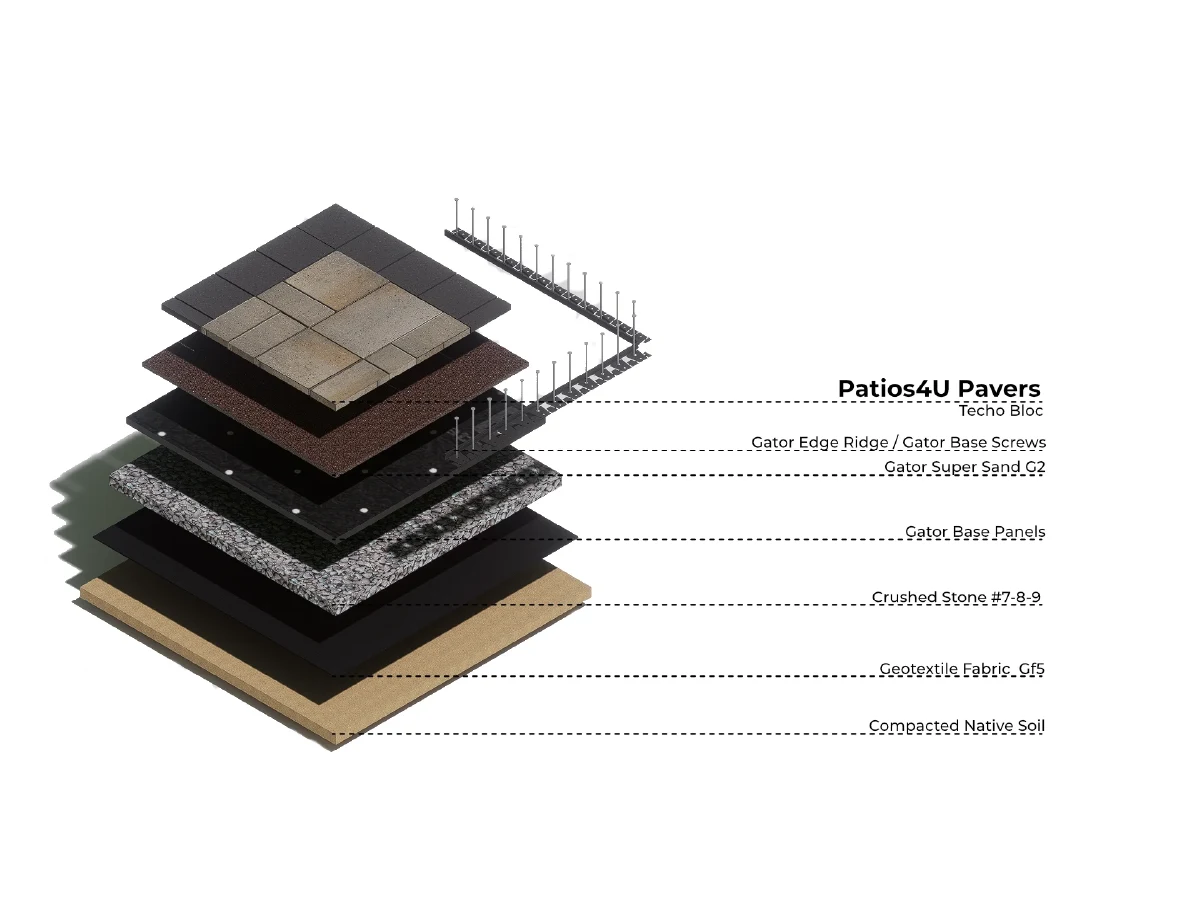
Structural breakdown
of the patio
STEP 1: Marking the Area
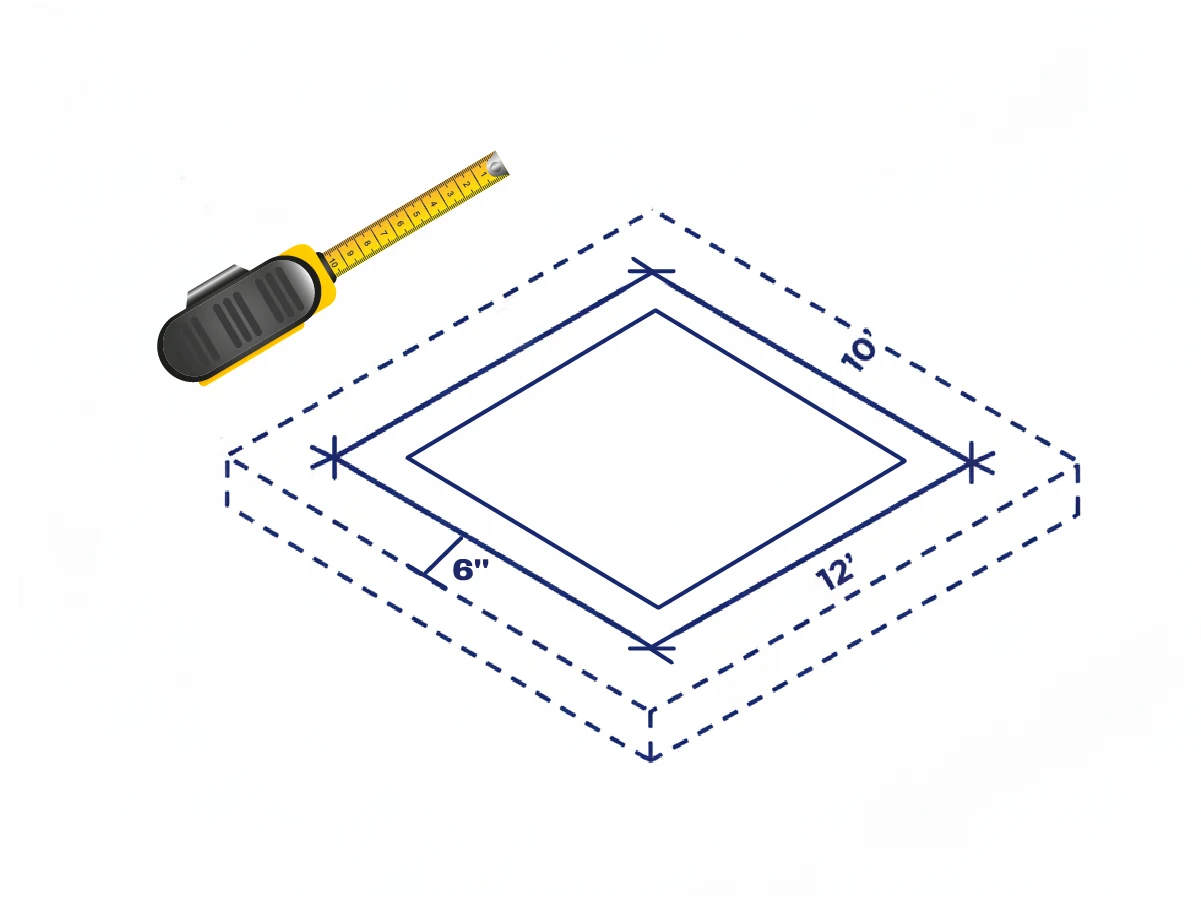
Define your final patio size (e.g., 10′ x 12′). Then, mark an extra 6 inches around the entire perimeter for the excavation zone (Total: 10.5′ x 12.5′).
Why: This extra space ensures stability for the edge restraints later on.
STEP 1: Marking the Area
Define your final patio size (e.g., 10′ x 12′). Then, mark an extra 6 inches around the entire perimeter for the excavation zone (Total: 10.5′ x 12.5′).
Why: This extra space ensures stability for the edge restraints later on.
STEP 2: Strategic Excavation (4″ Deep)
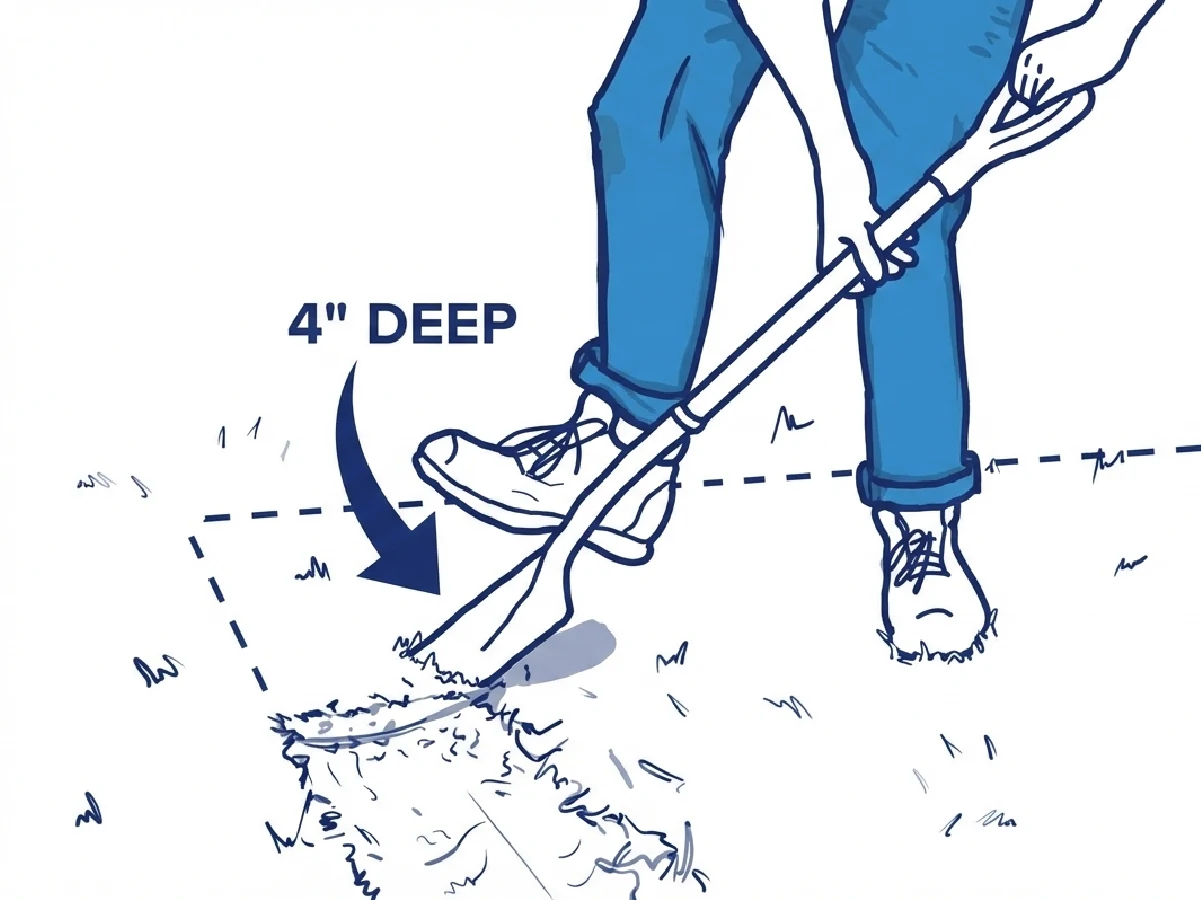
Excavate 4 inches deep across the entire marked area. Remove all large rocks, roots, and loose soil to create a clean sub-grade.
Pro Tip: Keep the bottom as flat as possible before compacting.
STEP 2: Strategic Excavation (4″ Deep)
Excavate 4 inches deep across the entire marked area. Remove all large rocks, roots, and loose soil to create a clean sub-grade.
Pro Tip: Keep the bottom as flat as possible before compacting.
STEP 3: Grading and Compaction
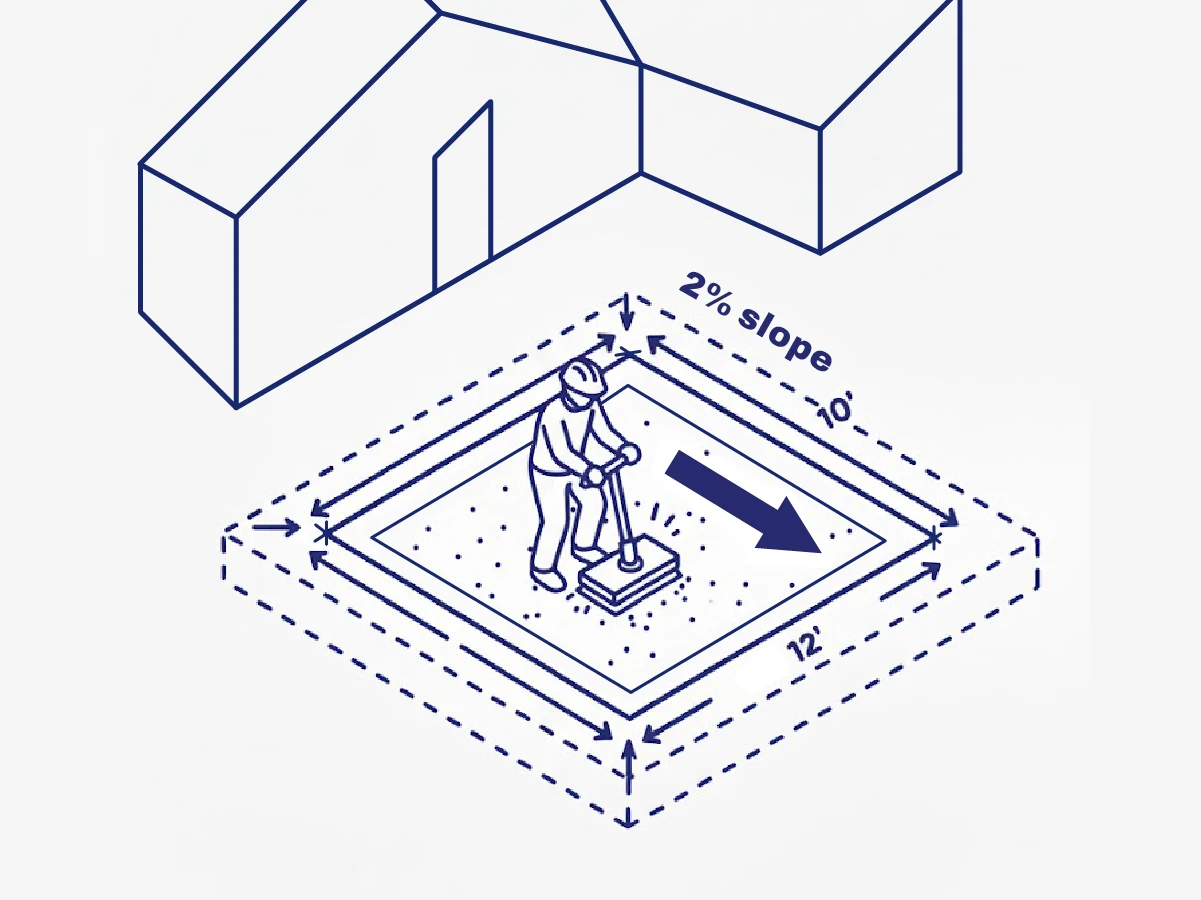
Compact the soil using a plate compactor or hand tamper. Crucially, you must grade the soil to create a 2% slope away from any structures (approx. 1/4″ drop per foot) to ensure proper water drainage.
STEP 3: Grading and Compaction
Compact the soil using a plate compactor or hand tamper. Crucially, you must grade the soil to create a 2% slope away from any structures (approx. 1/4″ drop per foot) to ensure proper water drainage.
STEP 4: Install Geofabric
Roll out the included geotextile fabric. Ensure it covers the bottom and extends up the sides of the excavation. If you need multiple strips, overlap them by 12 inches to prevent soil migration.
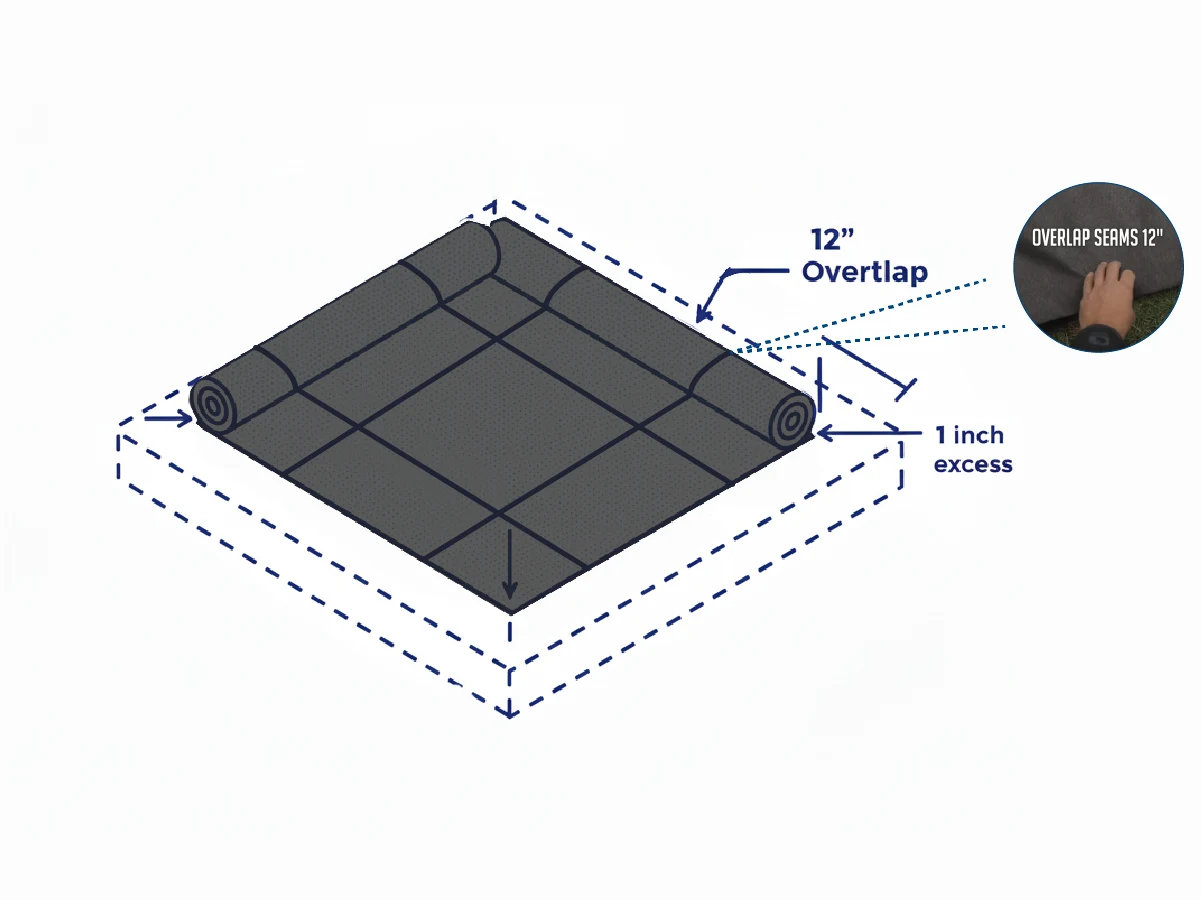
STEP 4: Install Geofabric
Roll out the included geotextile fabric. Ensure it covers the bottom and extends up the sides of the excavation. If you need multiple strips, overlap them by 12 inches to prevent soil migration.
STEP 5: Screeding (Leveling Bed)
Spread the #7-8-9 crushed stone mix. Use 3/4″ pipes as rails and a straight board to “screed” (level) the stone perfectly flat.
Detail: Remove the pipes and fill the grooves to leave a seamless, flat bed for the panels.
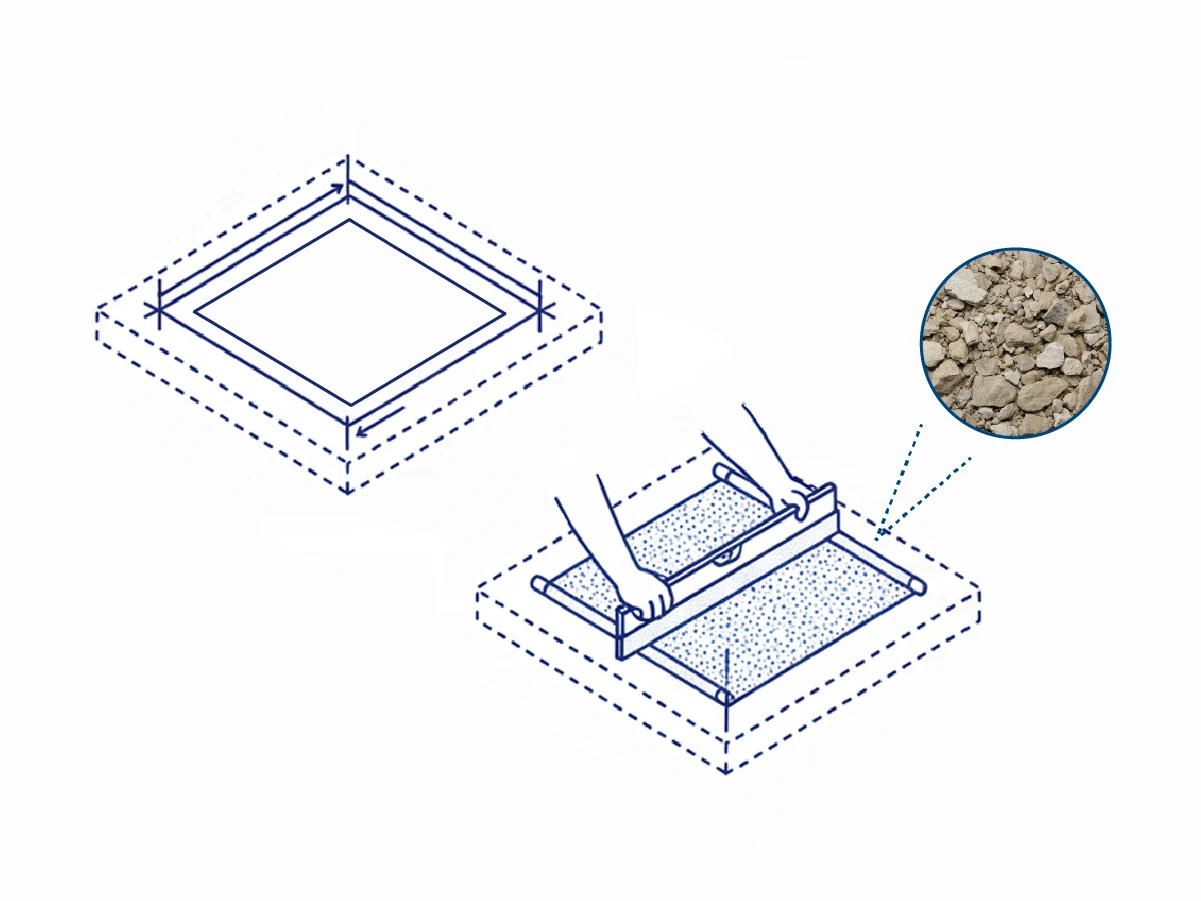
STEP 5: Screeding (Leveling Bed)
Spread the #7-8-9 crushed stone mix. Use 3/4″ pipes as rails and a straight board to “screed” (level) the stone perfectly flat.
Detail: Remove the pipes and fill the grooves to leave a seamless, flat bed for the panels.
STEP 6: Gator Base Panel Installation
Lay the lightweight modular panels directly on the screeded bedding. Install them in a staggered pattern (like bricks) to interlock the system and distribute weight evenly.
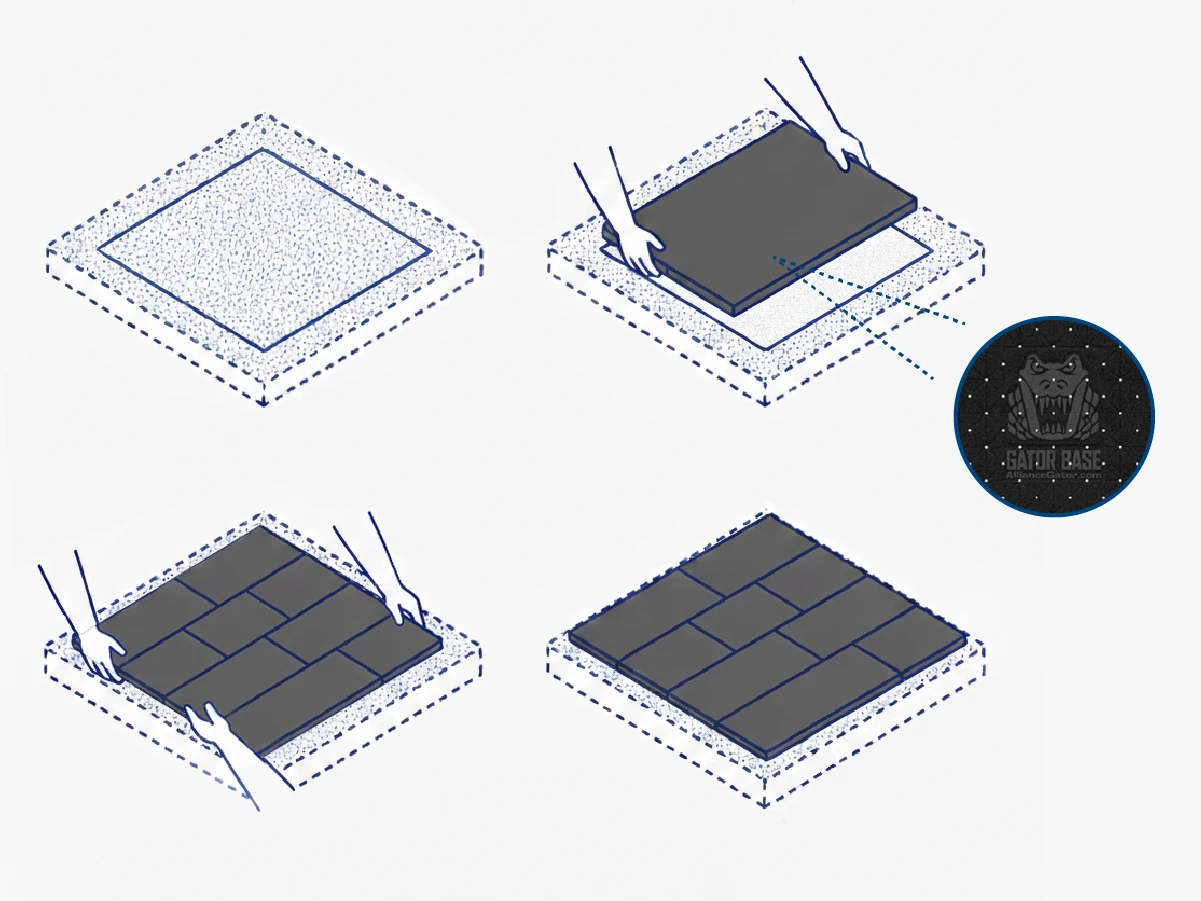
STEP 6: Gator Base Panel Installation
Lay the lightweight modular panels directly on the screeded bedding. Install them in a staggered pattern (like bricks) to interlock the system and distribute weight evenly.
STEP 7: Paver Installation
Place your pavers directly onto the panels. Follow the pre-set pattern for your model (Compact, Extend, or Pivot). Check your alignment frequently to keep lines straight.
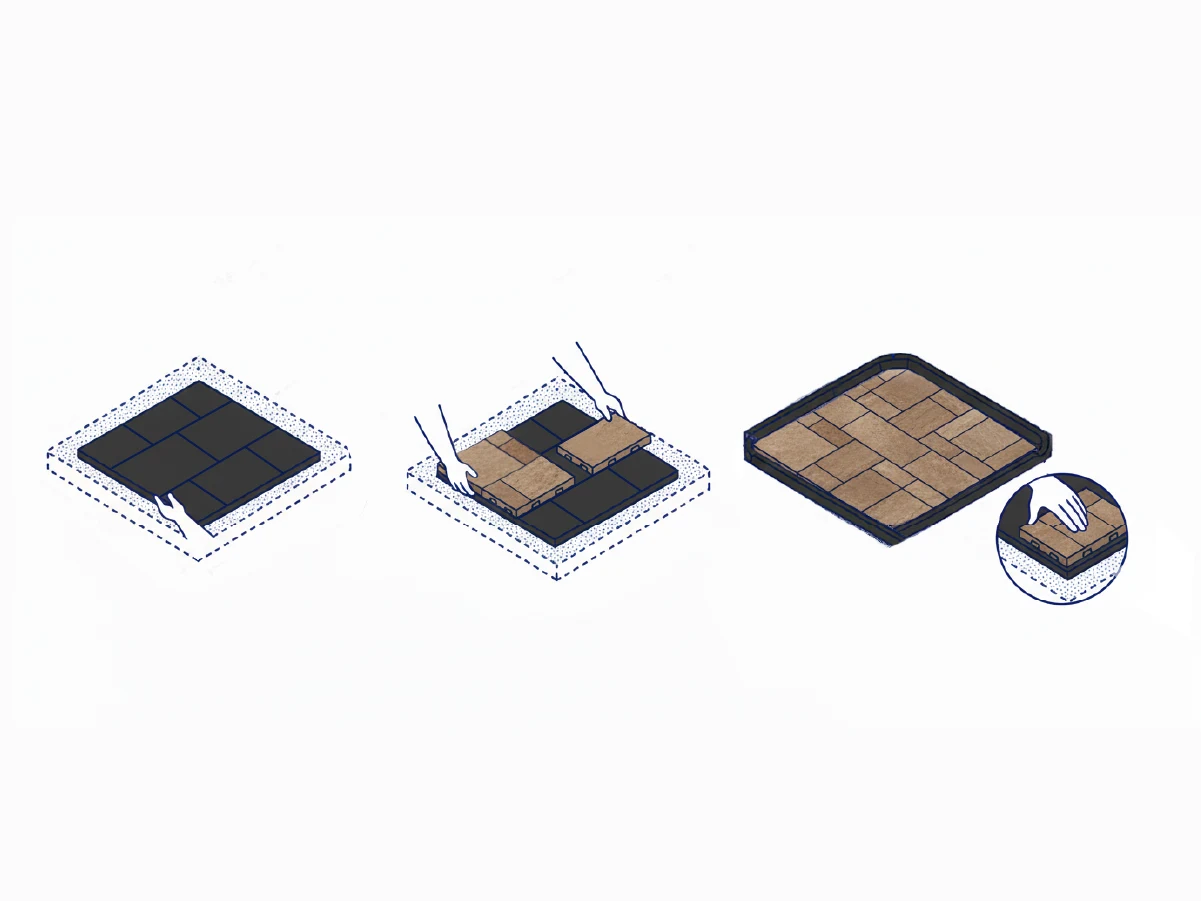
STEP 7: Paver Installation
Place your pavers directly onto the panels. Follow the pre-set pattern for your model (Compact, Extend, or Pivot). Check your alignment frequently to keep lines straight.
STEP 8: Edging
Once all pavers are laid, install the Edge Restraints tightly against the perimeter. Drive the heavy-duty spikes through the edging and panels into the ground to lock the entire patio in place.
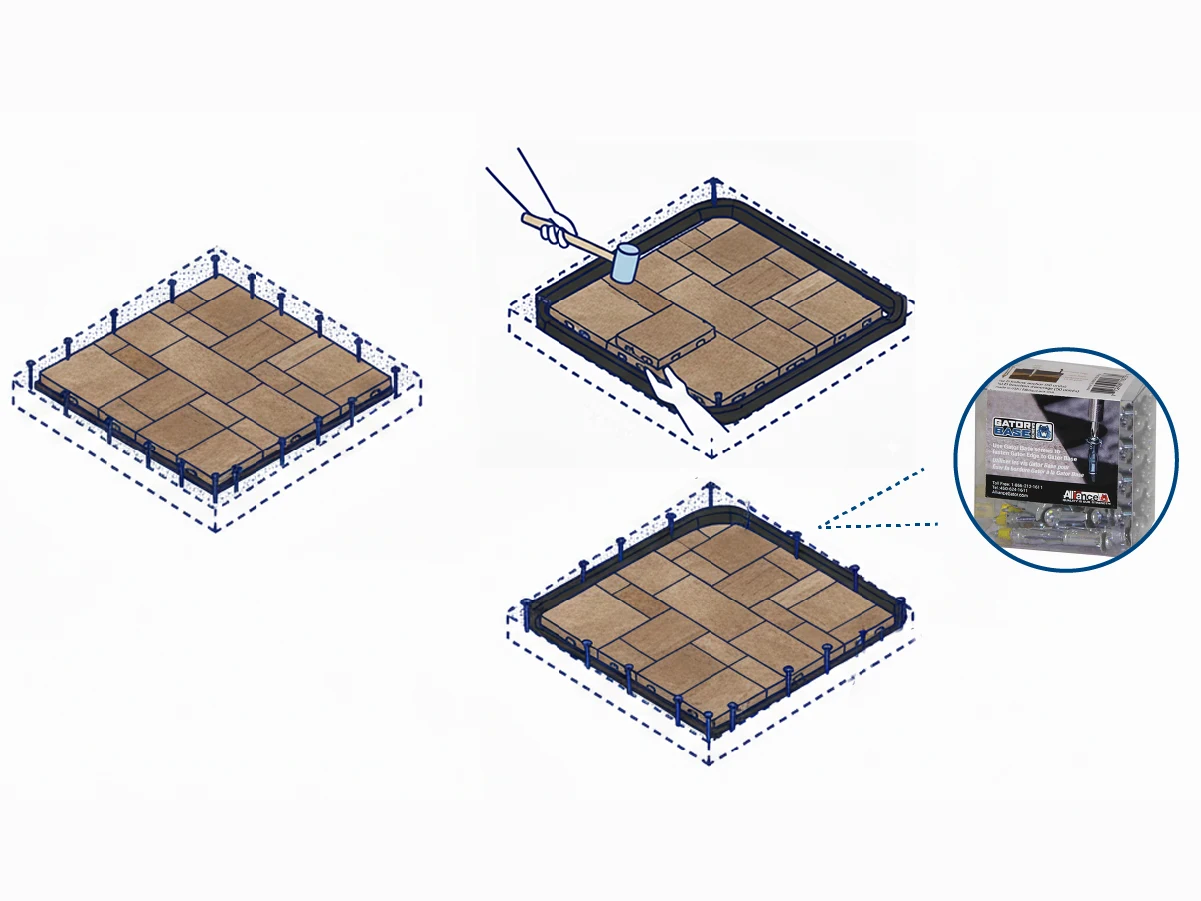
STEP 8: Edging
Once all pavers are laid, install the Edge Restraints tightly against the perimeter. Drive the heavy-duty spikes through the edging and panels into the ground to lock the entire patio in place.
STEP 9: Polymeric Sand Sealing
This is the finishing touch.
1.Sweep the sand into the joints.
2.Compact (with a protective pad) to settle the sand.
3.Blow off all excess dust from the surface.
4.Water gently to activate the binding agent.
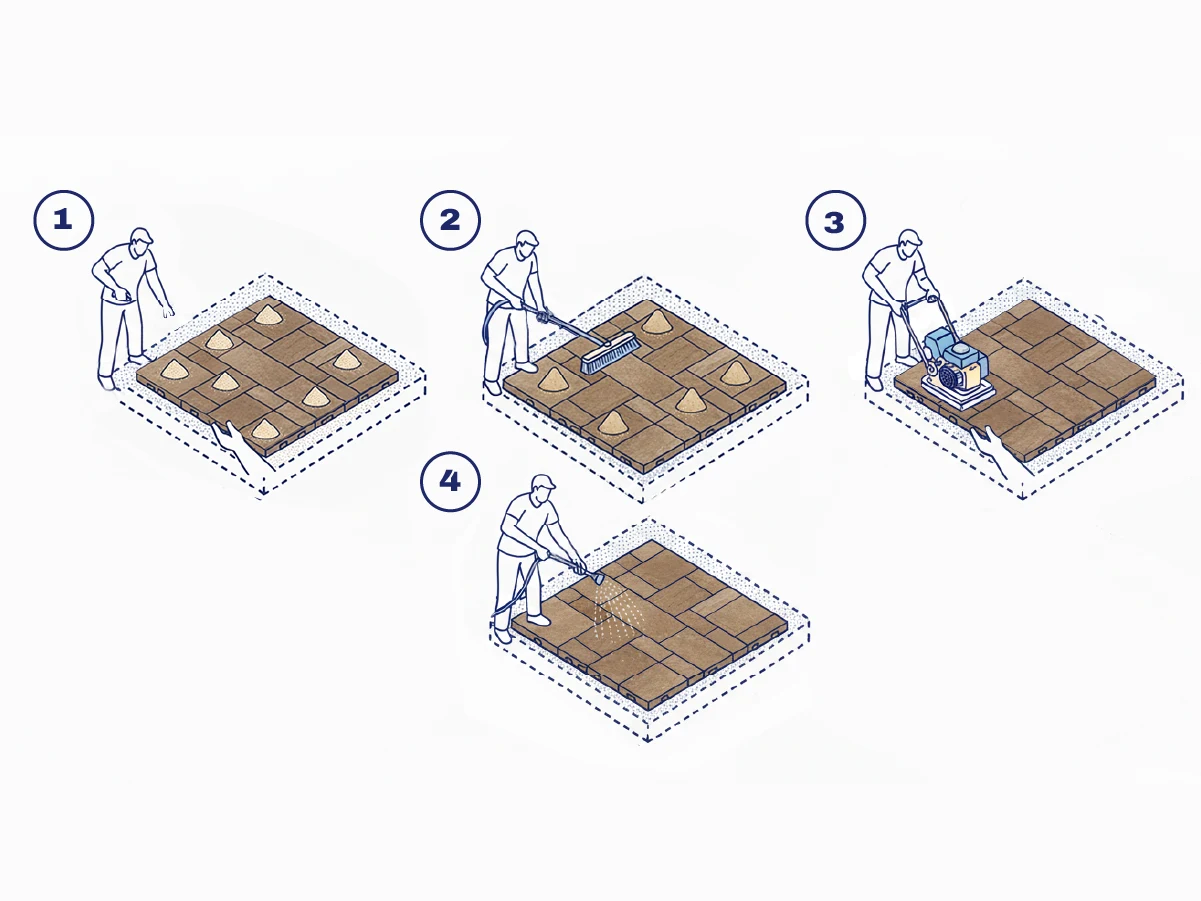
STEP 9: Polymeric Sand Sealing
This is the finishing touch.
1.Sweep the sand into the joints.
2.Compact (with a protective pad) to settle the sand.
3.Blow off all excess dust from the surface.
4.Water gently to activate the binding agent.
This complete printer-friendly pack includes:
✨ Post-Installation Care: Maintenance tips to keep your patio looking new.
📄 Compact Pattern Guide: Specific 10′ x 12′ layout diagrams and material list.
🛠️ Step-by-Step Installation Manual: From excavation to final finish.
This complete printer-friendly pack includes:
✨ Post-Installation Care: Maintenance tips to keep your patio looking new.
📄 Extend Pattern Guide: Specific 24′ x 10′ layout diagrams and material list.
🛠️ Step-by-Step Installation Manual: From excavation to final finish.
This complete printer-friendly pack includes:
✨ Post-Installation Care: Maintenance tips to keep your patio looking new.
📄 Pivot L-Shape Pattern Guide: Specific corner layout diagrams and material list.
🛠️ Step-by-Step Installation Manual: From excavation to final finish.
Keep the expert
in your pocket
Don’t want to rely on your phone’s signal in the backyard? Download our complete, printer-friendly installation manual. It includes advanced diagrams, checklists and pro-tips.
Bullet Points:
Printable Checklist
Offline Access
High-Resolution Diagrams
BLOG & ARTICLES
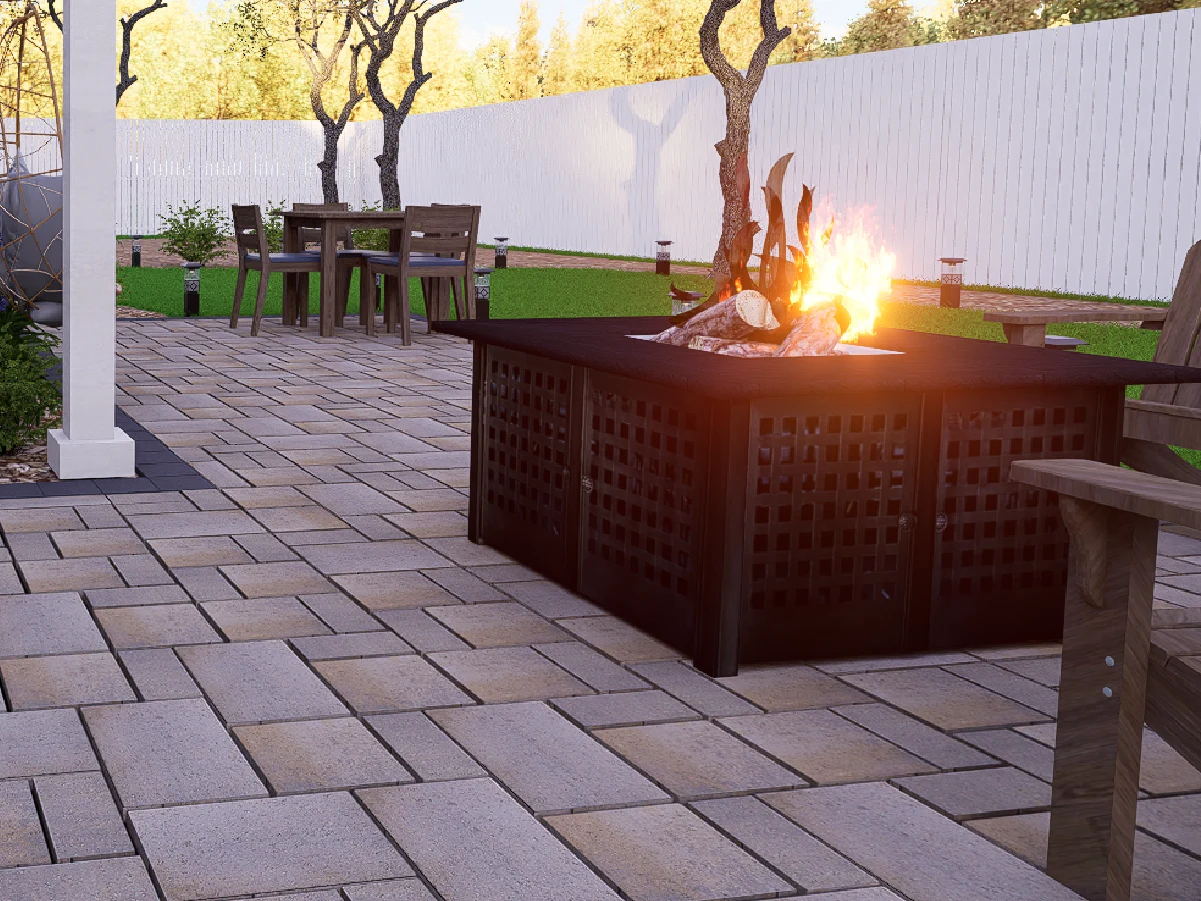
Compact vs. Extend: Choosing the Right Size for Your Lifestyle
Not sure if you need a cozy nook or a party deck? We break down the capacity of each model.
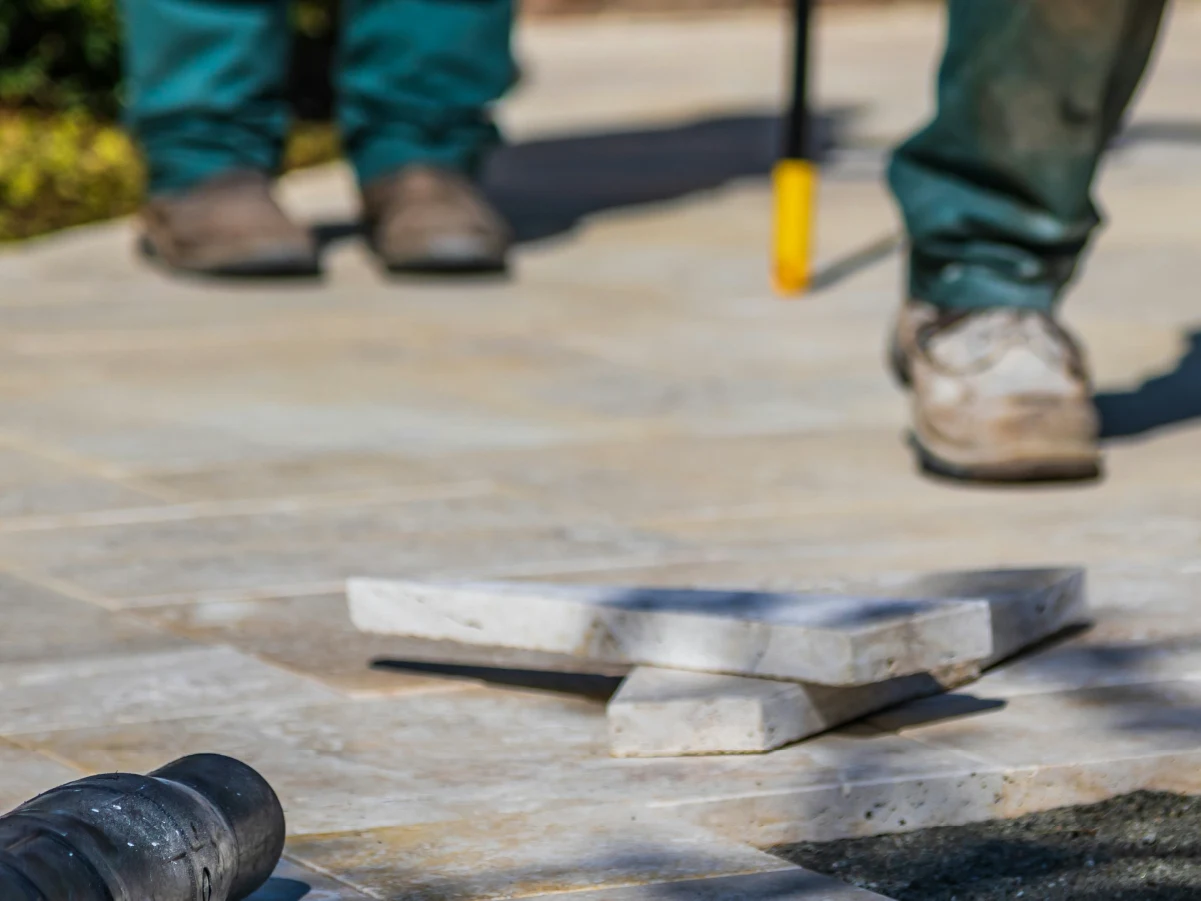
Why We Don’t Dig Deep: The Science Behind
Foam Panels
Discover how replacing crushed stone with engineered foam saves your back and insulates against frost.
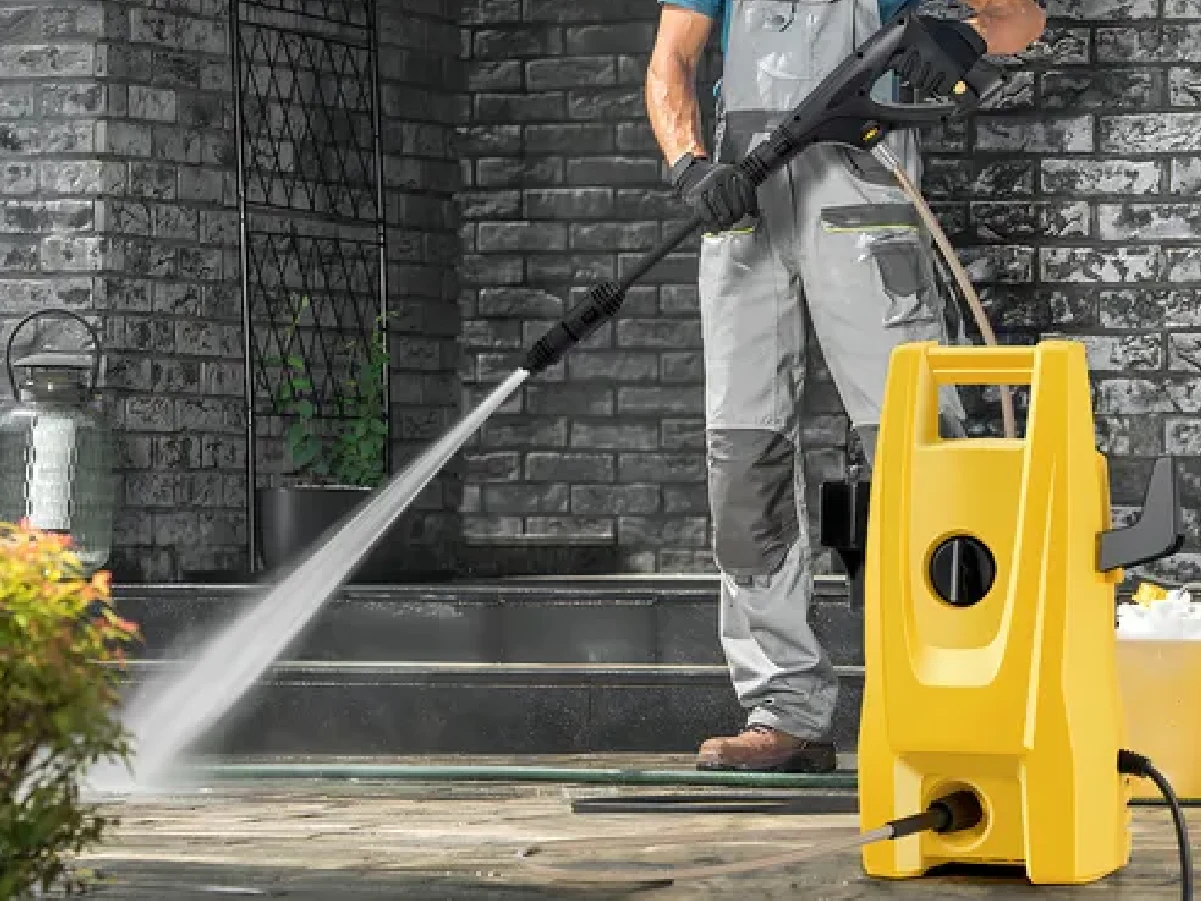
Spring Cleaning: How to Refresh Your Pavers
Simple tips to keep your patio looking brand new after the winter season.
Don’t build alone
Join the Patios4U community for seasonal maintenance tips,
exclusive design hacks, and special offers on accessories.
No spam.
Unsubscribe anytime.
YOU’VE SEEN
THE PROCESS
You have the knowledge. Now get the kit.
Everything you just learned is packed into one pallet and delivered to
your door. Turn this weekend into a transformation.
Everything you just learned is packed into one pallet and delivered to your door. Turn this weekend into a transformation.
Still have questions? Contact us.